
Walkways
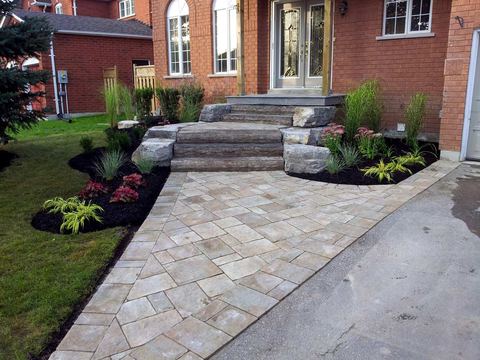
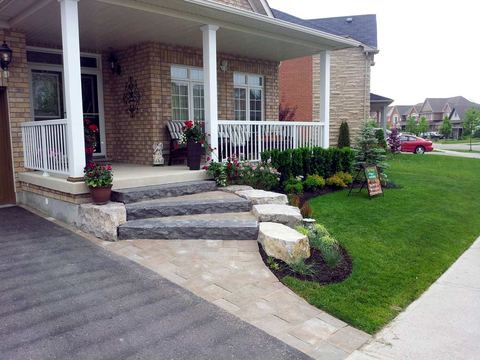
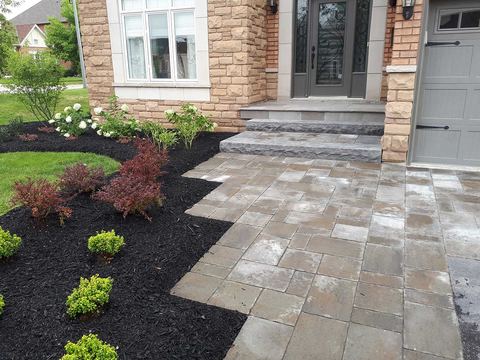
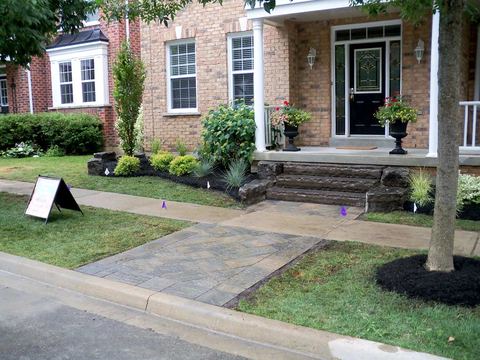
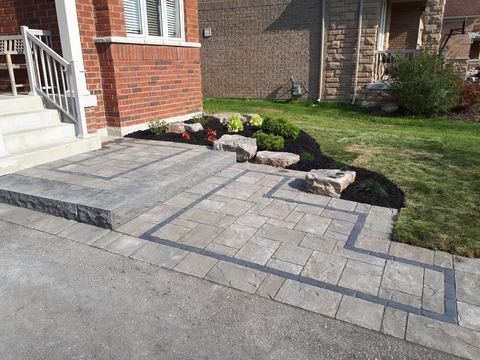
The walk from the driveway to the front door, or down the side of the house to the backyard. Interlock, natural stone or a flagstone walkway, straight or curved. Either way, the cut lines are straight.
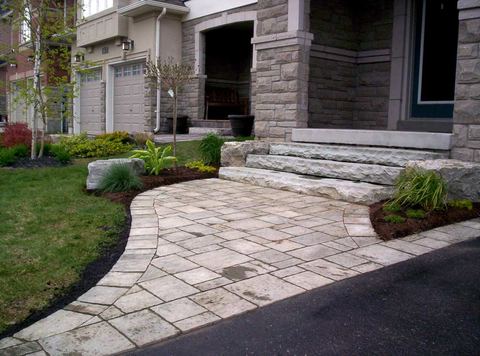
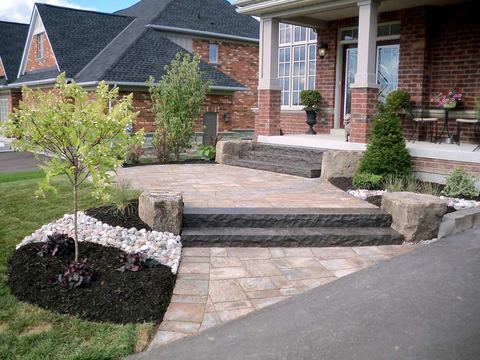
Cut lines you can follow with your eye
A walkway is mostly edges. Where it meets the driveway, the steps and the lawn, the pieces are cut to fit. When those cuts wander, you see it every time you come home.
So we cut by string line. The line goes down first, and the interlock or the asphalt banding is cut straight along it. A straight cut along the drive, a clean edge at the bottom step and a smooth curve along the lawn are what make a walk look finished, even more than the stone you pick.
The walkways we build
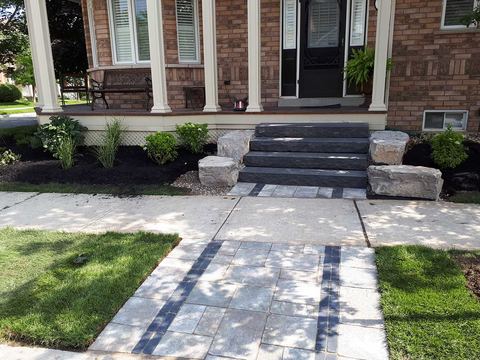
- Driveway to front door, tied in with new steps and a landing.
- Sidewalk to front door, straight in, on houses close to the street.
- Side yards: a walk along the house to the backyard gate or a side door.
- Interlock with a darker border band, natural stone slabs, or a flagstone walkway.
- Repairs to a walk that has sunk or heaved. No job’s too small.
Planning the route
Start from where you park. People take the shortest way from the car to the door, and if the walk sends them the long way round, they cut across the lawn and wear a path of their own.
Think about which door you really use, too. In a lot of houses the family comes in the side door and only guests use the front, so the side walk gets the most traffic. Make the walk wide enough for two people side by side if it’s the main way in, and keep shrubs back from the edge so they don’t crowd it as they grow.
How we work
- Someone from our crew walks the route with you, explains on site what we’d do, and sends a quote by text or email.
- The old walk or sod comes out, the base goes in, and the new walk is laid and cut straight where it meets the drive and the steps.
- The lawn edge is shaped back to the new walk and the beds are planted.
A new walk can be one part of a front entrance. See a bungalow front yard for one. We build walkways in Uxbridge, Port Perry, Stouffville and the surrounding areas.
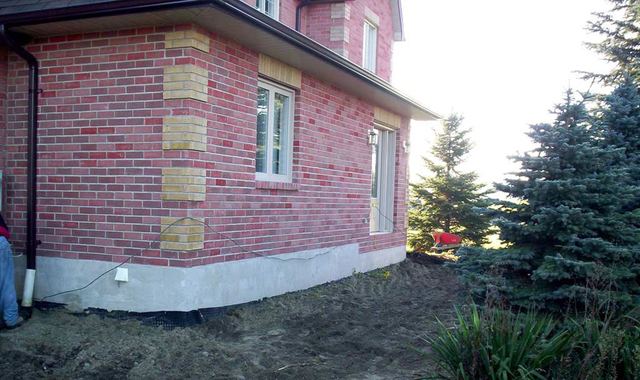
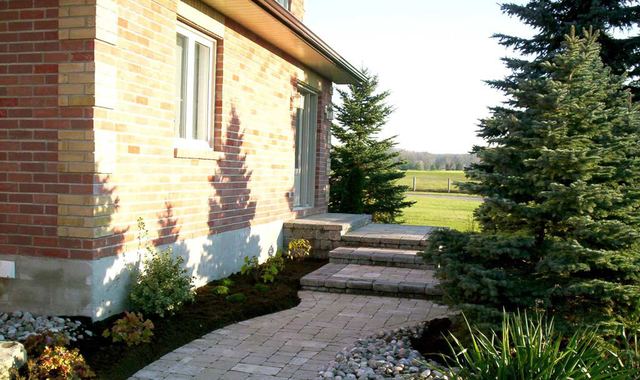
Before and after: a side walkway
Bare dirt along the side of the house, turned into an interlock walkway with steps, a planted bed and river rock. Drag the line to compare.
What’s under a walkway
Most walkway problems start underneath: a dip by the door, pavers that rock, an edge that spreads into the lawn. The stone on top only stays flat if the ground under it does.
Every walkway we build gets a drainage base. Before it goes in:
- Topsoil and triple mix always come out.
- Clay can be hard enough to build on. If it isn’t, it gets dug out.
- Roots all come out. A root left behind rots, leaves a hollow, and the walk above it sinks.
Every site is different, so we look at your ground before we say what goes under your walk. For the general industry guidance on base depth, see our interlock page.
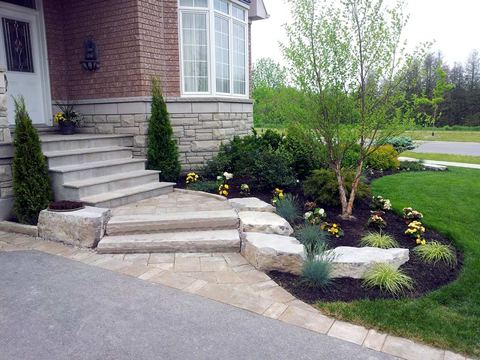
Slope and heights
A walk along the house should carry water away from the wall, not toward it. Where the walk meets the driveway, the steps and the lawn, the heights have to match too, so you don’t get a lip to trip on or a low spot where puddles freeze.
Not every walk is interlock
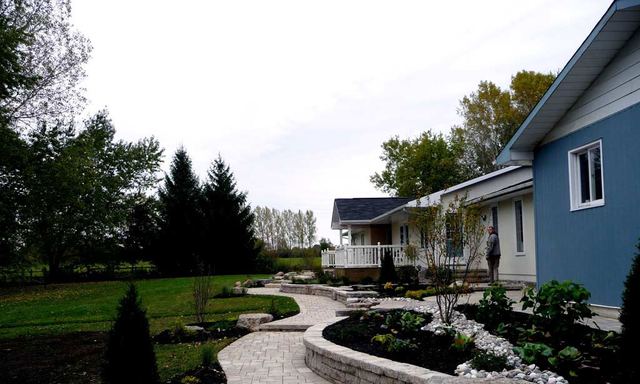
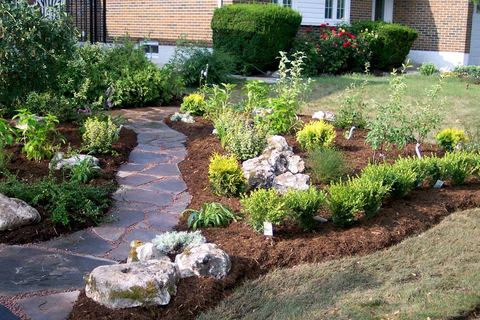
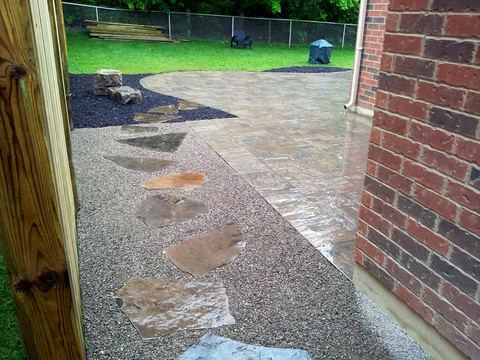
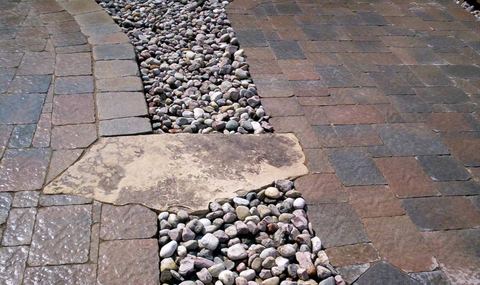
Interlock with a border, a flagstone path, or stepping stones in gravel. The route and the house decide which.
Interlock, natural stone or flagstone
It mostly comes down to budget, and to the house.
- Interlock is made of uniform units, so it lays out cleanly in a straight line or a curve. A border band in a darker colour gives it a clear edge. Single units can be lifted and reset if a patch settles, and the industry notes that an experienced crew can do it “with little or no cutting”.
- Natural stone slabs and a flagstone walkway look less uniform, because every piece is different. That suits a garden path or an older house.
- Stepping stones set in gravel are the lightest touch, good for a side yard that sees a few trips a week rather than every guest.
Many front walks mix them: interlock for the main run, natural stone for the steps.
Looking after a walkway
If a patch dips after a few seasons, call us. We do repairs. For joint sand, weeds and which de-icer to use in winter, see our interlock page.
Questions about walkways
Straight or curved?
It depends on the house and the way people really walk in. We’ll suggest one on site, and you decide. Our front entrance ideas show both.
Can you take out my old concrete or brick walk?
Yes. Our brick walkway story shows one.
Do you do driveways?
Yes, interlock borders and accents along a driveway, and asphalt banding. Tell us what you have in mind and we’ll talk it through on site. See interlock and pavers.
Thinking about a new walkway?
Call, text or email. Someone from our crew will come out, talk it through and send you a quote.