
Patios
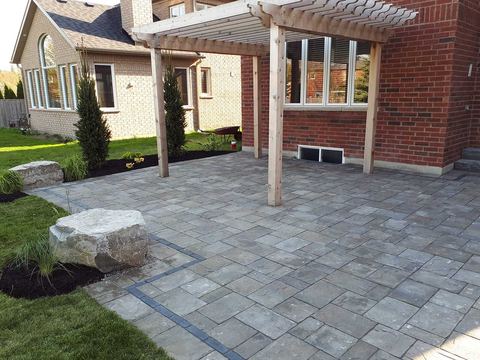
An interlock, natural stone or flagstone patio off the back or side of the house, with armour stone at the edges and planting around it.
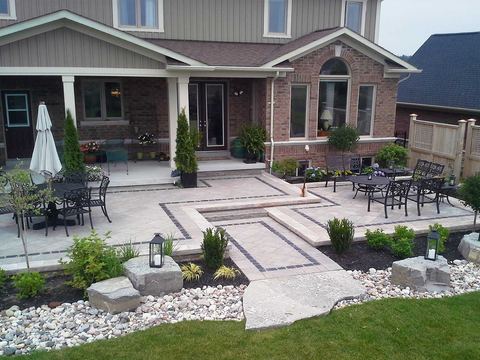
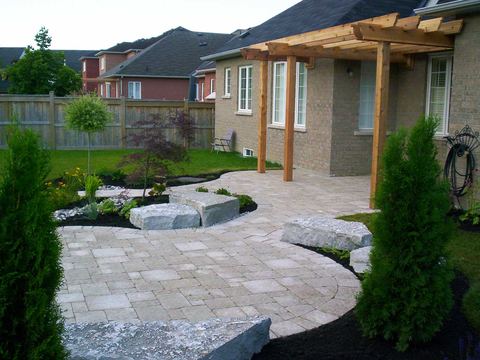
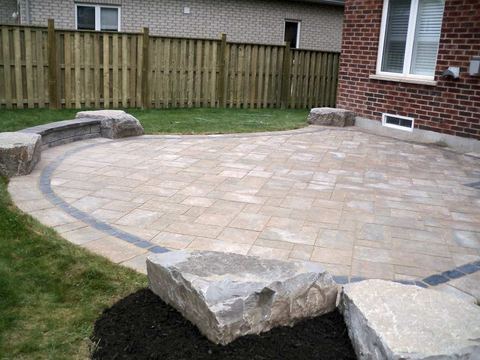
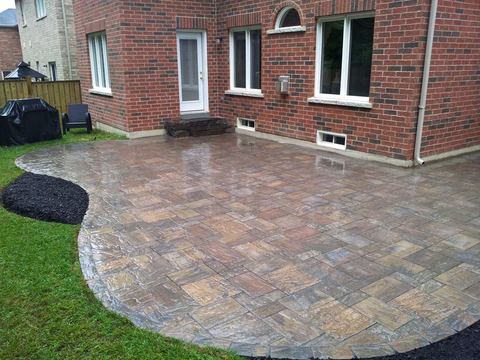
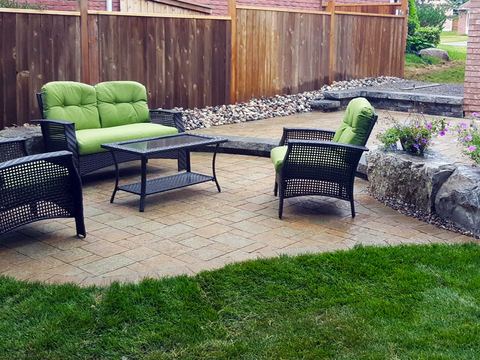
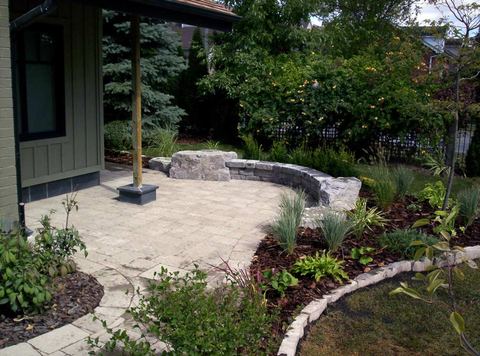
A patio built around how you’ll use it
A table and chairs for dinner outside. A couple of lounge chairs in the shade. A spot for the barbecue near the back door. We start with how you want to use the space, then shape the patio to fit the yard and the house.
Some come with a few steps down from the house, a curved edge into the lawn, or armour stone at one side. No job is too small, and we do repairs too, like relaying an old patio that has sunk.
Where a patio works
The best spot is usually the one you will walk to without thinking: right off the back door, or a side door you already use. A patio at the far end of the yard looks good on paper and gets used less.
Before we come out, think about:
- How many chairs you want out there, plus room to pull them out.
- Sun and shade at the time of day you’ll sit out.
- Privacy from the neighbours, which a screen or a hedge can fix later.
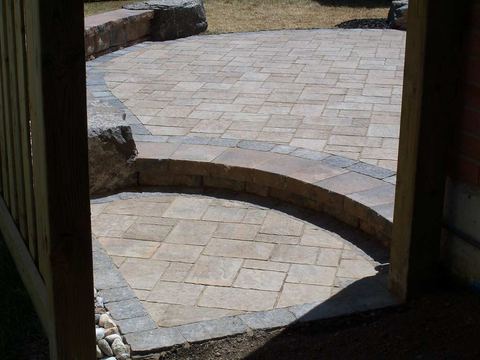
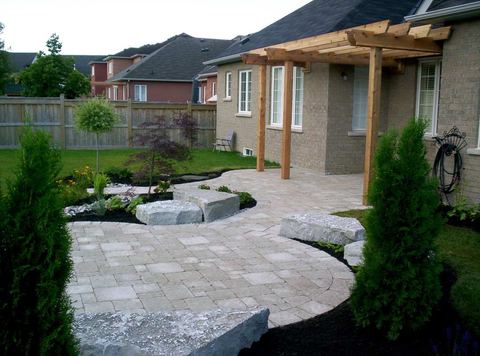
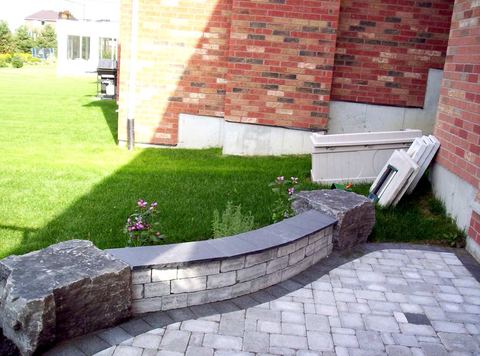
- How the ground falls. A slope may need a step down, a low wall at one side or a patio on two levels, like the round one in the photo below.
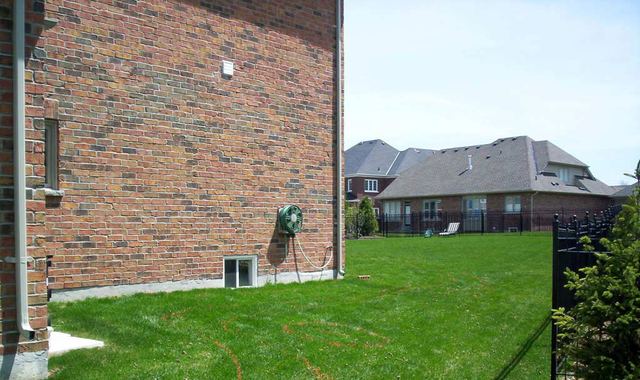
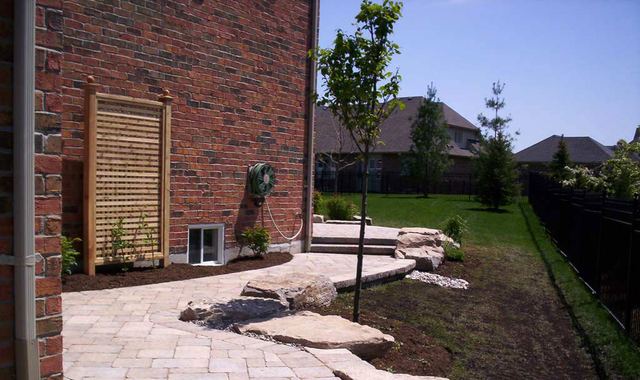
- Side yards. A narrow strip along the house can hold a patio, as in the before and after on this page.
What goes into one
- Interlock in one colour or with a border band, laid in a pattern that suits the space.
- A natural stone or flagstone patio.
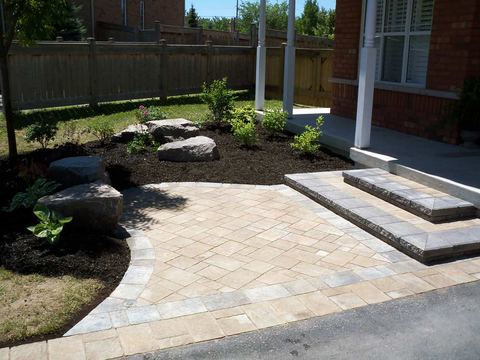
- Steps down from the back door or a deck, and stepping stones out to the lawn.
- Armour stone edging, seats and low walls.
- Planting around the edge, and a pergola or a privacy screen if you want one.
How we build it
- Someone from our crew comes out, explains on site what we’d do, and sends a quote by text or email.
- The old surface or sod comes out, with the topsoil, the triple mix and every root. Roots rot, leave a hollow, and the patio above sinks. Clay can be hard enough to build on; if it isn’t, it gets dug out. Every site is different.
- A drainage base goes in. Every patio we build gets one.
- The patio goes down where we agreed, with border bands and edges cut straight.
- The edges are finished with stone or planting, and the lawn is shaped back to it.
We build patios in Uxbridge, Port Perry, Stouffville and the surrounding areas. If the front of the house needs it more, start with front entrances. More backyard photos are on our work.
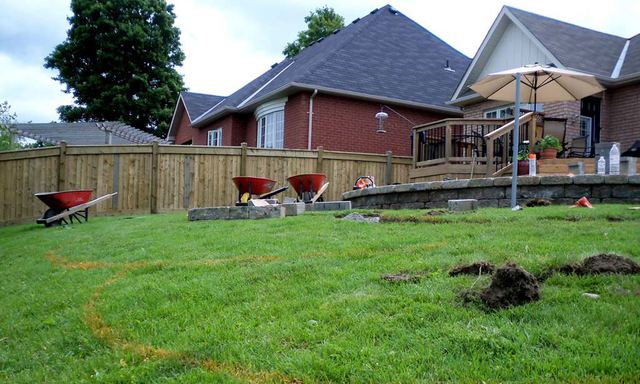
Before and after: a side yard patio
A plain strip of lawn along the house, now an interlock patio with armour stone steps, a wooden screen and a young tree. Drag the line to compare.
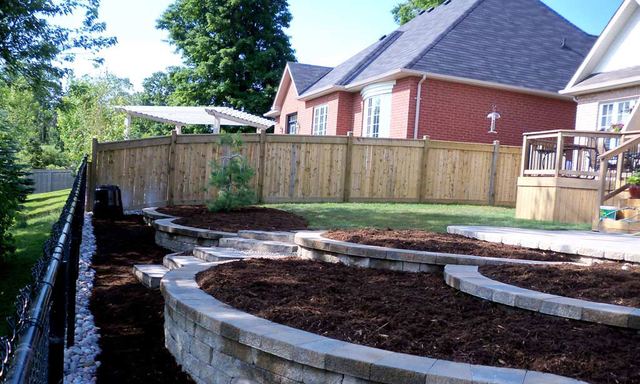
Two backyards, two shapes
A sloped yard held in tiers, and a round patio that steps down to a lower circle.
Interlock, natural stone or a flagstone patio
All three make a good patio. They differ in look, in how they are laid and in how they age. Here is the short version. Our interlock or natural stone guide goes deeper.
Interlock
Concrete pavers in a set size, laid tight on a sand bed over a packed base. It gives a flat, even floor that suits a dining table, and it comes in many colours and patterns, from a plain field with a darker border band to a herringbone like the big curved patio in our photos.
If a corner settles, the pavers can be lifted and relaid. The interlock and pavers page walks through the base, the edges and the joints layer by layer.
Natural stone
Cut stone slabs, more even than flagstone and more natural-looking than pavers. Stone varies a lot by type. The Natural Stone Institute notes that only a limited number of limestones have a long record as outdoor paving where it freezes and thaws, and that limestone can be marked by mild acids.
On a patio where people eat, that is a reason to wipe up acidic spills like lemon juice or vinegar quickly.
Flagstone
Flat stone in uneven, natural shapes, fitted together by hand. A flagstone patio has a softer, garden look, and the joints are wider than on interlock. Flagstone also works as stepping stones out to the lawn or across a bed, like the flagstone set across a strip of river rock in our work. The fitting takes time, because each piece is chosen for its spot.
Steps, levels and the drop from the back door
Many back doors sit well above the yard, so the patio starts with a few steps or a landing. Comfortable steps are even and not too steep, so nobody has to watch their feet with a plate in their hands.
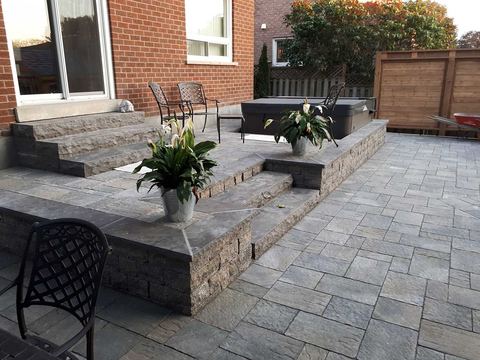
If the budget allows, we suggest natural stone slabs for the steps; our steps page explains why. Where the yard drops a lot, the simpler answer is often to step the patio down in two levels, or to hold one side with a low wall of armour stone, so the patio stays close to the ground.
A pergola or a screen to go with it
A patio often wants shade or privacy. We build pergolas and privacy screens to go with one.
Looking after your patio
A patio needs little more than a sweep now and then. For interlock, the interlock page has more on salt, joints, weeds and the white haze some new pavers get.
Questions about patios
Do you do the lighting and irrigation too?
No. We don’t do lighting or irrigation. If you want them, plan them with another trade before the patio goes in.
Interlock or natural stone for a patio?
Both work, and it depends on the budget. When we come out, we’ll tell you on site which suits your yard. See interlock or natural stone.
Do you build flagstone patios?
Yes. We build interlock, natural stone and flagstone patios, and flagstone steps and stepping stones out to the lawn. Flagstone gives a softer, garden look with wider joints. When we come out, we’ll tell you which suits your yard and how you’ll use it.
How close to the house can a patio go?
Right beside it, as long as it slopes away from the house. On a patio against the wall, the slope has to carry water away from the foundation, never toward it.
Can you add a pergola or privacy screen to the patio?
Yes. We build pergolas and privacy screens, so they can be planned with the patio from the start. See pergolas and privacy screens.
My backyard slopes. Can it still have a patio?
Usually, yes. A slope can mean a step down from the house, a low armour stone wall along one side, or a patio on two levels. When we come out, we’ll look at how the ground falls and suggest the layout right there on site.
When should I book a patio for the summer?
Late fall for the next spring, because spring books up the fall before.
Want a place to sit?
Call, text or email. Someone from our crew will come out, talk it through and send you a quote.