
Steps and landings
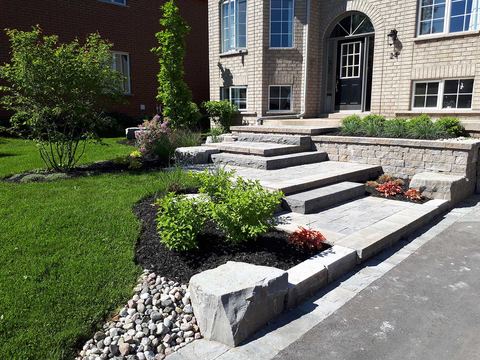
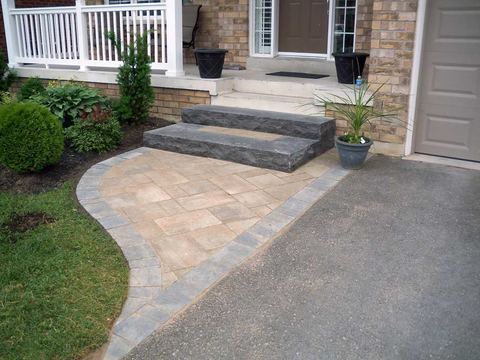
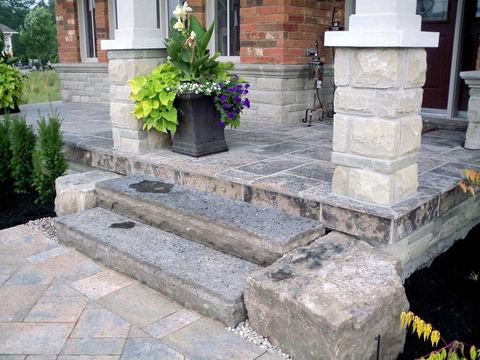
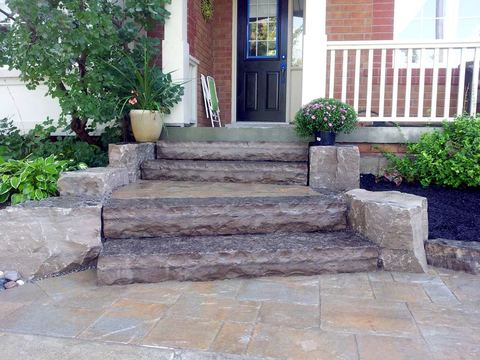
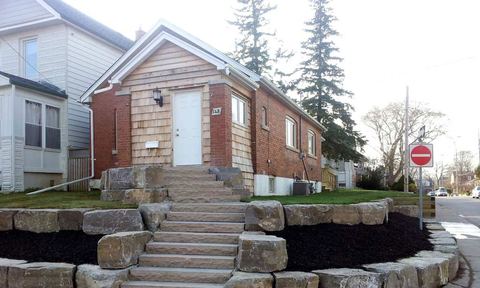
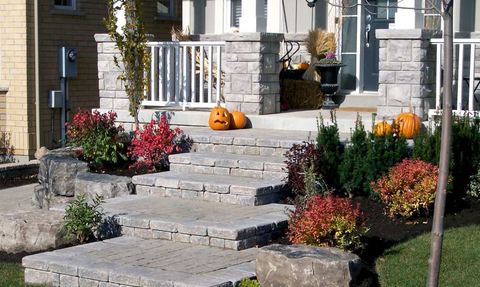
Wide stone steps and a proper landing at the door. We replace tired precast and concrete steps with natural stone, armour stone or interlock, set straight and level.
The steps we build
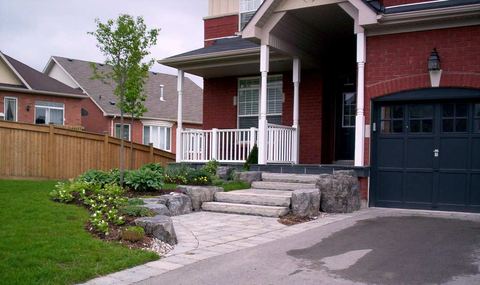
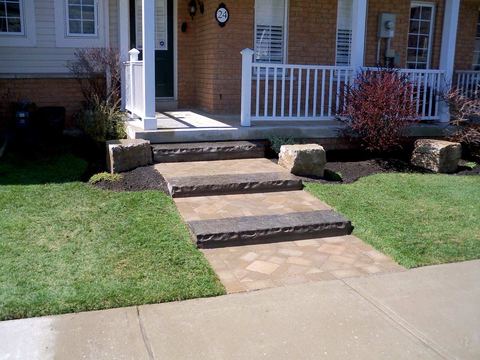
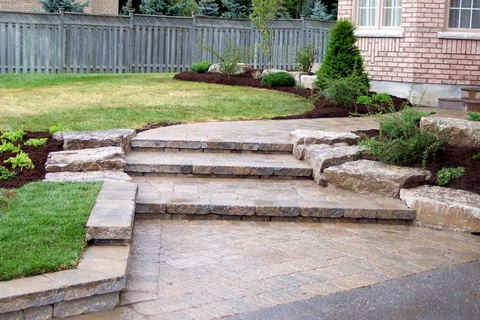
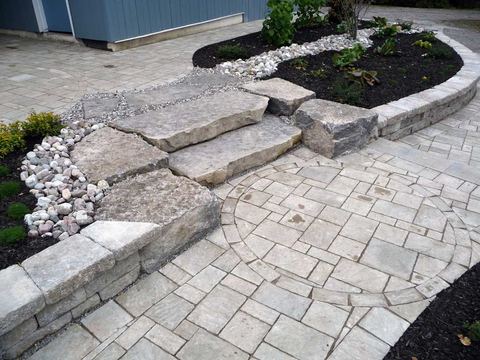
- Natural stone steps, with armour stone at the sides where a bed needs holding.
- Armour stone steps: big squared blocks, set as steps into a slope or a raised bed. See armour stone.
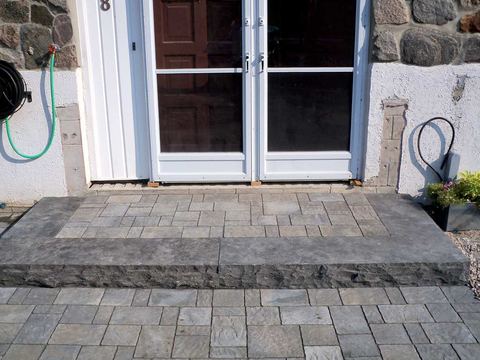
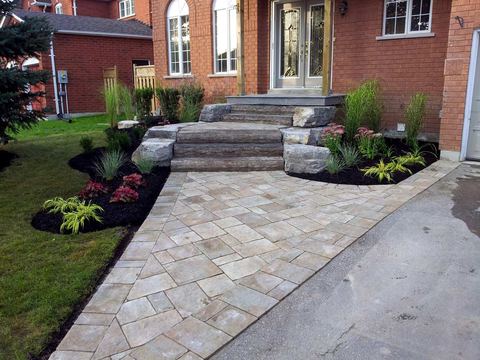
- Interlock steps and landings, matched to an interlock walkway or patio.
- Stone steps up a steep front yard, with landings to break up the climb.
Natural stone or precast?
If the budget allows, we use natural stone slabs for steps. Precast and other man-made blocks shift with frost over the years. Sooner or later, they move.
Precast is still fine when the budget calls for it. Done well, on a good base, precast steps shouldn’t move for a long time. We’ll tell you on site which way we’d go for your house, and why.
Replacing precast and concrete steps
Old precast and poured concrete steps shift, crack or just look tired. We look at what’s there and tell you straight what can stay and what should go.
The height from the walk up to your door decides how many steps you need, and the number of steps decides how far they reach out from the porch. Sometimes the porch is sound and only the steps change. Sometimes the old stoop has settled or tipped and the whole thing comes out.
A proper landing at the door
The landing is the flat spot at the top, where you stand to find your keys and open the door. A lot of older houses have a stoop barely wider than the door, so you step back down to let the storm door swing. A wider landing fixes that, and it gives the steps a clean place to start.
A landing can be stone or interlock, and the two mix well: an interlock landing at a double door can take a long stone slab step along its front edge. Either way, it has to be built as solidly as the steps, so the two stay together.
How we work
- Someone from our crew comes out, explains on site what we’d do, and sends a quote by text or email.
- The old steps come out and the new ones go in, every tread straight and level.
- The sides get finished with armour stone, planting or both.
We don’t leave until you’re happy. New steps can be one part of a full front entrance. We build them in Uxbridge, Port Perry, Stouffville and the surrounding areas.
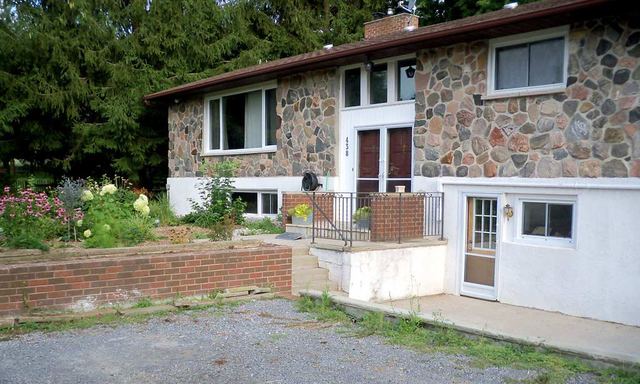
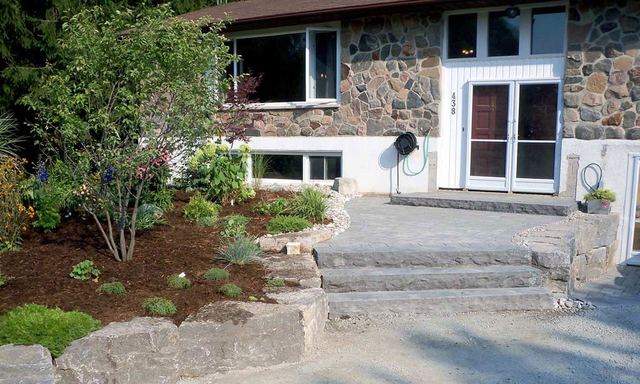
Before and after: new steps on a split-level
A plain concrete stoop off a gravel drive, rebuilt as wide stone steps with an armour stone wall and a planted bed. Drag the line to compare.
What goes under stone steps
Steps last as long as the ground under them. Here’s what we do before any stone goes down.
- Natural stone steps sit on a concrete slab. Our crew learned that one over time.
- Topsoil and triple mix always come out.
- Clay can be hard enough to build on. If it isn’t, it gets dug out.
- Roots all come out. A root left in the ground rots, leaves a hollow, and the step above it sinks.
Every site is different, so we look at the ground on yours before we say what goes under the steps.
Steps that feel easy
Comfortable steps are even and not too steep. Every step should be the same height as the one before it, because your foot learns the first step and expects the rest to match. The odd step is the one people trip on.
Each tread should sit level from side to side and shed water away from the door, so rain doesn’t pool and freeze at the top step. And the landing should be big enough to stand on while you open the storm door.
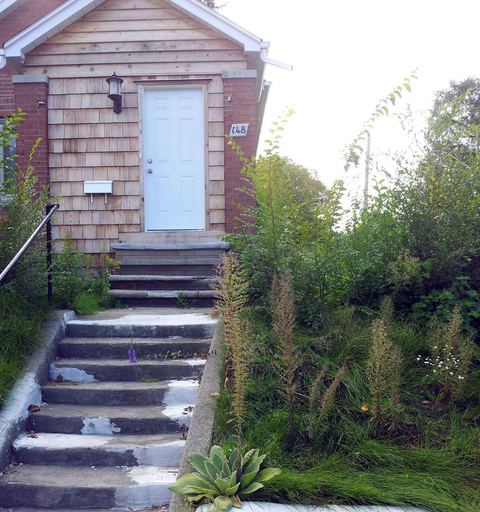
On a steep front yard, a landing partway up breaks the climb into two short flights. That’s easier on the legs than one long run, and it gives you somewhere to stop with the groceries.
Two step jobs, before and after
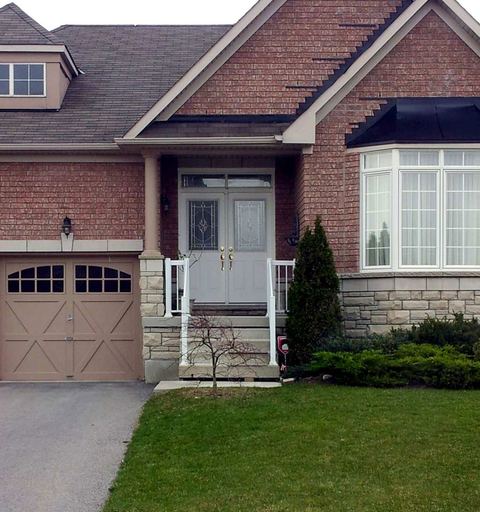
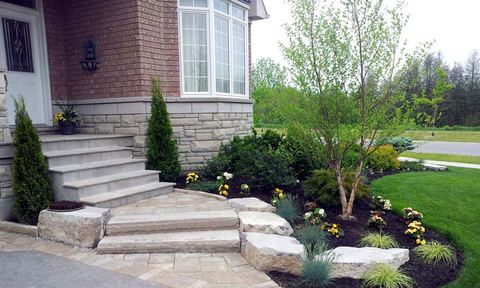
Drag each line. Old steps out, stone steps in.
Natural stone, armour stone or interlock steps
- Natural stone steps are often one slab per tread, so there are few joints and the steps read as one piece.
- Armour stone steps are big squared blocks, set into a slope or the edge of a raised bed. They suit a yard with a real climb.
- Interlock steps are built from smaller units and match an interlock walk or landing. They’re also simple to fix later: the paver industry notes that an experienced crew can lift and reset the units “with little or no cutting”.
Many of the jobs in the photos mix them: stone steps, an interlock walk, armour stone at the sides. Our guide to interlock or natural stone puts the two side by side.
Questions about steps
Can you replace my precast concrete steps?
Yes. Two of our before and after stories show it.
Does my porch have to come out too?
Not always. In our precast steps story the porch stayed and only the steps and beds changed. We’ll tell you on site what can stay.
Do you build steps on a steep front yard?
Yes. Landings break up a long climb, like the steep yard in our front entrance ideas. We lay it out with you on site.
Do you repair steps, or only build new ones?
We do repairs too. No job’s too small. Call or text and tell us what’s going on with your steps.
Can you build new steps in the winter?
No. We don’t do winter work. Spring books up the fall before, so the fall is the time to call about next year’s steps.
Steps that need replacing?
Call, text or email. Someone from our crew will come out, talk it through and send you a quote.