
Armour stone
Big squared stone blocks for low walls, raised beds, steps and edging. Every row goes in straight and level.
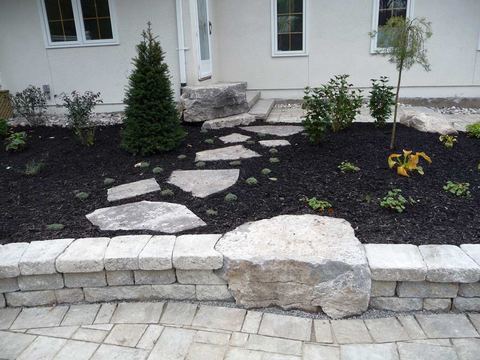
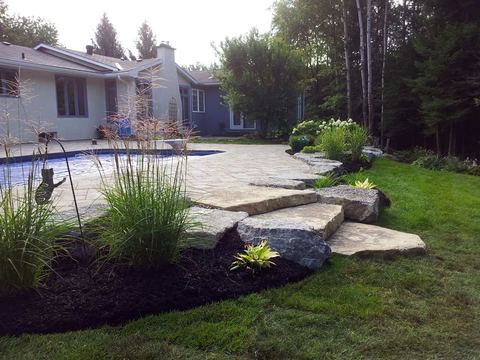
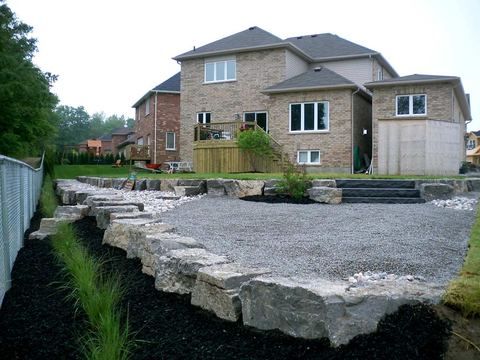
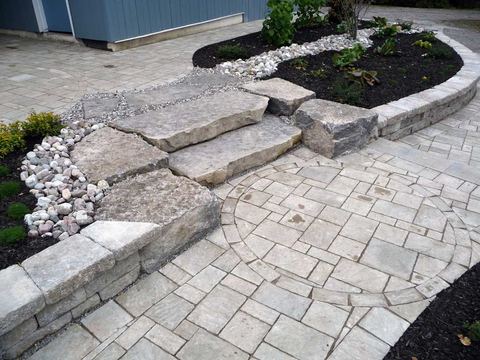
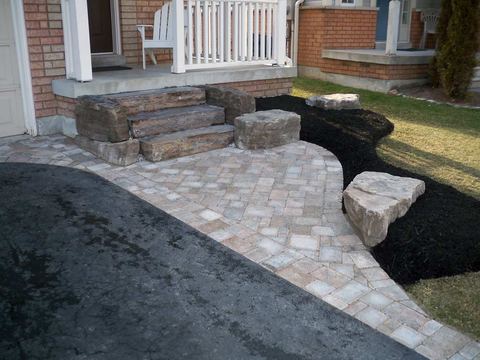
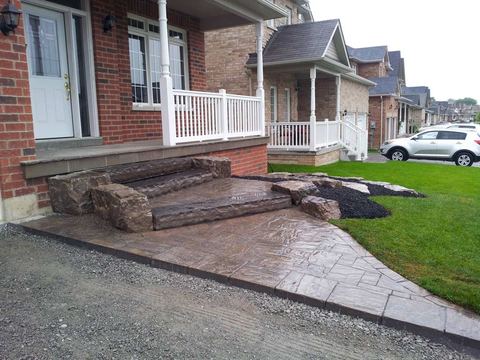
Crooked armour stone is easy to spot
Armour stone is heavy and hard to move once it’s down, so a block set a little off stays off, and you see it from the street.
Crooked, unlevel armour stone is one of our pet peeves when we see other people’s work. You can really tell who cared and who didn’t. On our jobs every block goes in straight and level, so the rows read as one clean wall.
What armour stone is
Armour stone is natural stone cut or split into large, roughly squared blocks. It is often limestone: one Ontario city’s landscape spec, for example, asks for squared natural limestone with a natural chipped face, in blocks close to a metre long.
No two blocks are quite the same. That is a big part of the look, and a big part of the work. Each block gets turned and set so its top sits level with the next one and its face lines up with the row.
Where we use it
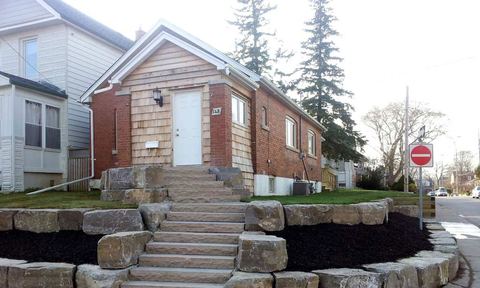
- Low armour stone retaining walls that hold a raised bed or a change in grade, front or back.
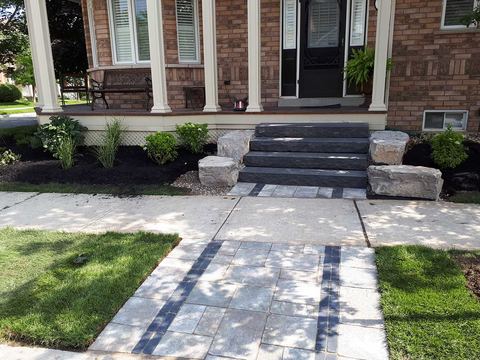
- Steps set into a slope, either all armour stone or armour stone at the sides of slab steps.
- Edging along beds, walkways and driveways, and single boulders as accents in a bed.
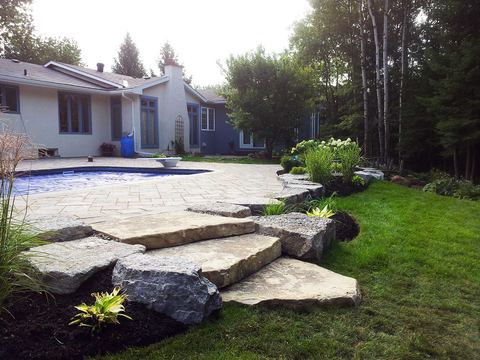
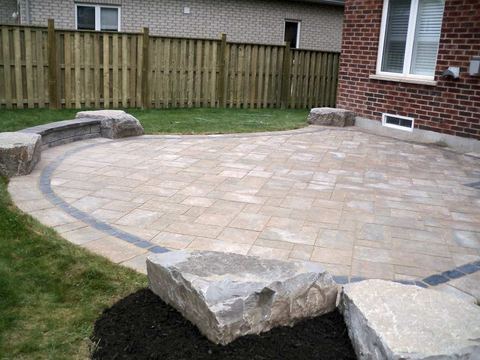
- Large flat slabs as steps or seating beside a patio or a pool.
How we build it
- We dig out whatever can’t carry the stone. Topsoil and triple mix always come out.
- Roots come out too, every one. A root left in the ground rots, leaves a hollow, and the stone above it sinks.
- The stone goes on firm ground. Armour stone can sit on good, undisturbed native ground. Clay can be hard enough to build on, and if it isn’t, it gets dug out.
- We line up every block with a string line, so the row runs straight and the tops sit level.
- The bed behind is filled and planted, and the lawn is finished back to the stone.
Every site is different, so what goes under the stone is decided on your site, not from a chart. Armour stone can hold the beds and steps of a front entrance: see precast steps to natural stone and brick walkway to stone steps. We set it in Uxbridge, Port Perry, Stouffville and the surrounding areas.
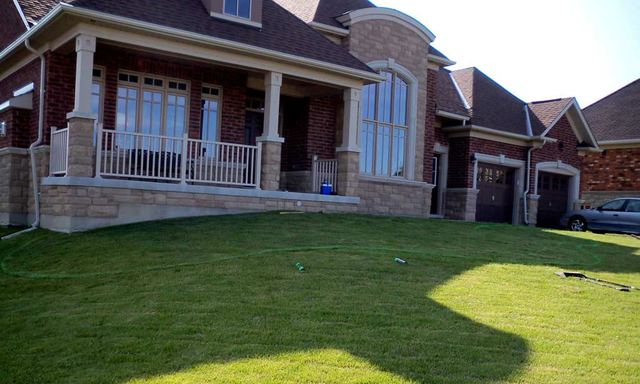
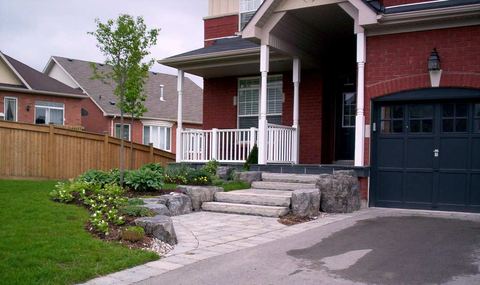
Before and after: a raised bed in front of a porch
A plain lawn up to the porch, now a bed held by a straight row of armour stone and planted with shrubs. Drag the line to compare.
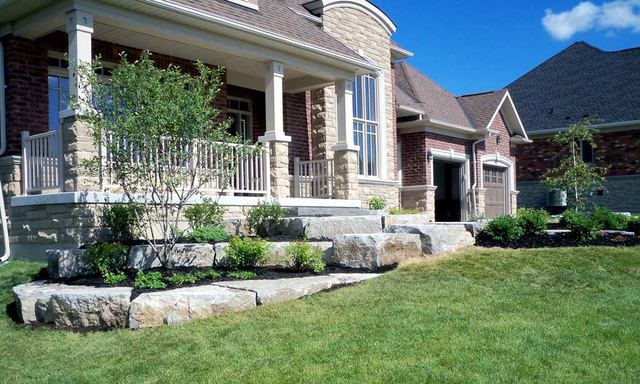
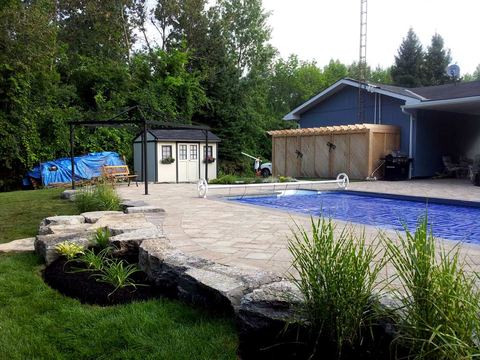
Straight and level, or it shows
Steps up from a driveway and stone along a pool. The same rule for both.
Why armour stone retaining walls lean
A wall can look right on the day it goes in and still lean over the years. Two things decide it: the ground under the wall and the water behind it.
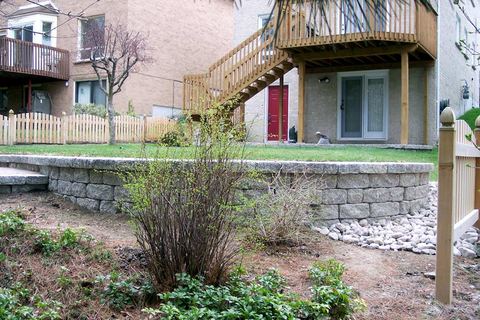
The ground is covered above. For water, general industry guidance from wall makers says water that collects behind a wall can make it settle, and calls for a drainage layer behind block walls. It also notes that most retaining walls lean back into the slope a little, which is called a batter. That guidance is written for manufactured block, not armour stone.
Armour stone and natural stone steps
Armour stone makes good steps on a slope: wide, solid and hard to wear out. Some of our front steps mix two stones, natural stone slab treads with armour stone at the sides.
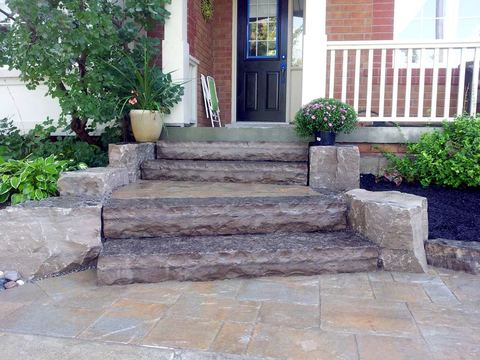
If the budget allows, we suggest natural stone slabs for steps. Our steps and landings page explains why, and how they’re set.
Comfortable steps are even and not too steep. With armour stone, where every block is a little different, getting each step the same height takes patience.
Caring for armour stone
Armour stone needs very little. Weeds can seed into the joints and the bed behind the wall, so pull them while they’re small.
After the first winter or two, walk the wall in spring and look along the top of each row. A block that has dropped or tipped points to water or soft ground under it. Have it looked at while it is one block and not a row.
How to judge an armour stone job
Before anyone builds you a wall, go and look at walls they built a few years ago. Stand at one end and look down the top of the row. It should be straight and level, with no block tipped forward or sunk.
Look at the steps: are they all the same height? Then ask what goes under the stone, and why.
Questions about armour stone
What is armour stone?
Large, roughly squared blocks of natural stone, used for walls, steps and edging.
Why is my armour stone wall leaning?
Most often it is water or what is under it. Water trapped behind the wall pushes on it, and blocks set on soft soil, topsoil or old roots can sink.
A block that has tipped can sometimes be lifted and reset on firm ground. A wall that leans along its whole length may need to come apart and go back together on firm ground. We can look at it when we come out.
Can you fix or reset armour stone someone else set?
Yes, we do repairs, and no job is too small. We’ll tell you on site whether a few blocks can be reset or the row needs to be rebuilt.
Armour stone or a block retaining wall?
Armour stone is natural stone in big, rough blocks, so it suits gardens, slopes and country lots, and it doubles as steps or a seat. Manufactured wall block is smaller and more even, so it builds a tidier, more regular face.
When should I book an armour stone job?
Late fall for the next spring, because spring books up the fall before.
Have a slope or a bed to hold?
Call, text or email. Someone from our crew will come out, talk it through and send you a quote.